
Understanding and Treating Tendonitis with Physical Therapy
Tendonitis can make even simple movements painful, but the right physical therapy approach can help reduce inflammation, improve mobility, and restore strength. This article explains what causes tendonitis, how targeted physical therapy techniques support healing, and which exercises help prevent it from returning.
Jason Lamendola PT
1/2/20262 min read
Understanding and Treating Tendonitis with Physical Therapy
Introduction
Tendonitis (or tendinitis) is the inflammation of a tendon—the thick, fibrous tissue that connects muscles to bones. It is most often caused by repetitive stress, overuse, or improper movement patterns that lead to tiny tears and irritation within the tendon.
Although tendonitis can occur anywhere in the body, it is most common in the:
Elbows
Knees
Shoulders
Hips
Achilles tendon
Base of the thumb
Because it often occurs from repetitive motions, tendonitis is commonly known by activity-based names such as Tennis Elbow, Golfer’s Elbow, Swimmer’s Shoulder, Pitcher’s Shoulder, Jumper’s Knee, or Achilles Tendinitis.
If you're experiencing pain or tenderness just outside a joint, especially during movement, tendonitis may be the cause. Without proper treatment, tendonitis can worsen and increase the risk of a tendon rupture.
How Physical Therapy Treats Tendonitis
Physical therapy is one of the most effective treatments for tendonitis. It reduces inflammation, restores movement, strengthens surrounding muscles, and helps prevent the condition from returning. Below are the most common PT approaches used to treat tendonitis.
Pain Management Exercises
These exercises are designed to reduce inflammation, relax tight tissues, and reduce tension on the injured tendon.
Examples include:
Calf Wall Stretch / Eccentric Heel Drops – for Achilles tendonitis
Wrist Curls / Wrist Extensor Stretch – for tennis elbow
Contrast therapy (hot/cold), soft tissue massage, rest intervals – for general pain relief
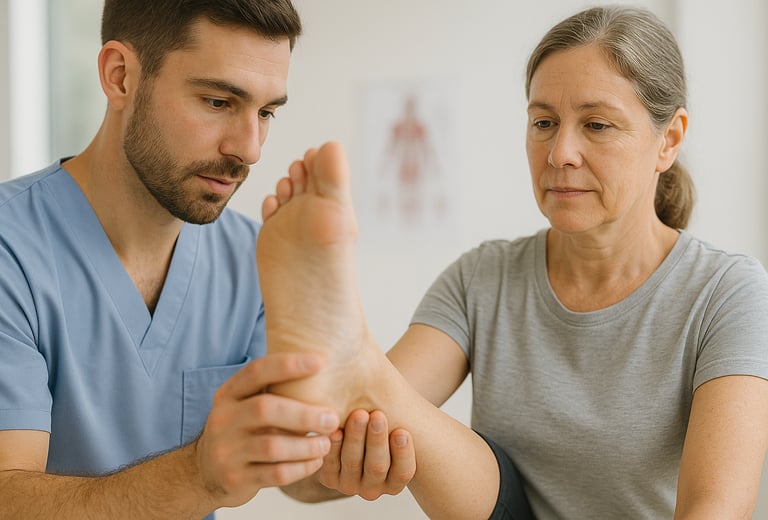
Manual Therapy
Hands-on techniques help improve mobility, decrease tightness, and promote healing.
Common methods include:
Assisted stretching
Cross-friction massage
Myofascial release
Trigger point release
Joint mobilization
Passive range of motion
These techniques help reduce inflammation, improve circulation, and restore functional movement.
Stretching and Strengthening Exercises
These exercises improve flexibility, reduce tendon tightness, and rebuild strength to prevent further injury.
Examples include:
Calf stretch – for Achilles tendonitis
Wrist extensor stretch – for tennis elbow
Cross-body shoulder stretch – for rotator cuff tendonitis
Hamstring stretch – for lower limb tendonitis
Range of Motion (ROM) Exercises
ROM exercises improve mobility, reduce stiffness, and help tendons glide smoothly again.
Examples include:
Ankle pumps – Achilles tendonitis
Wrist circles – Golfer’s elbow
Pendulum swings – Rotator cuff tendonitis
Heel slides – Patellar tendonitis
Wall walks – Rotator cuff tendonitis
Supination/pronation – Elbow tendonitis
Toe spreads – Plantar fasciitis
Functional Training
Functional exercises mimic everyday movements and strengthen tendons during real-world activity.
Examples include:
Step-ups – Patellar tendonitis
Single-leg balance – Patellar tendonitis
Farmer’s carry – Shoulder or elbow tendonitis
Lateral band walks – Knee tendonitis
Push-offs – Achilles tendonitis
Gradual Return to Activity
This phase bridges the gap between rehab and full activity by preparing the tendon for increased stress safely.
Examples include:
Walking progression – Lower limb tendonitis
Modified push-ups – Shoulder tendonitis
Light hopping or mini jumps – Achilles or patellar tendonitis
Step-back lunges – Achilles or patellar tendonitis
Cycling – Lower limb tendonitis
Takeaway
Physical therapy is the key to treating tendonitis—from reducing pain and inflammation to restoring mobility and safely reintroducing activity. A skilled physical therapist will help identify contributing factors, suggest activity modifications, and guide you through a personalized rehabilitation plan.
With the right treatment, tendonitis is highly manageable—and full recovery is achievable.
At TLC Physical Therapy, our team provides personalized treatment plans to help you reduce tendon pain, restore mobility, and rebuild strength safely and effectively. Whether your tendonitis developed from overuse, repetitive motion, or an injury, we guide you through every stage of recovery with expert care. Your healing matters to us—let’s get you back to moving comfortably and confidently.