Train Smarter: How Physical Therapy Helps Athletes Perform Better
Physical therapy isn’t just for injury recovery—it’s a powerful tool for improving athletic performance. Learn how sports physical therapy enhances strength, flexibility, balance, and movement while helping prevent injuries and keep you performing at your best.
Jason Lamendola PT
5/4/20262 min read
Introduction
Many people think of physical therapy as something you only need after an injury or surgery. While that’s true, physical therapy also plays a major role in improving athletic performance, preventing injuries, and enhancing overall fitness.
Sports physical therapy isn’t just for professional athletes—it benefits anyone who wants to move better, stay active, and perform at their best. Whether you're playing sports, exercising regularly, or simply staying active, a personalized physical therapy program can help strengthen your body, correct imbalances, and improve performance.
How Physical Therapy Helps Athletes Recover from Injuries
Injuries are a common part of sports and physical activity. Physical therapists specialize in treating areas most prone to injury, such as:
Knees
Hamstrings
Hips
Shoulders
Through customized rehabilitation programs, PT helps:
Reduce pain and inflammation
Restore strength and flexibility
Improve mobility and function
Speed up recovery after injury or surgery
Physical therapists don’t just aim to get you back to your pre-injury level—they work to improve your overall performance by strengthening surrounding muscles and correcting movement patterns to prevent future injuries.
How Physical Therapy Improves Athletic Performance
Physical therapy enhances performance in several key ways:
Improved Flexibility and Range of Motion
A well-designed PT program targets tight muscles and joint restrictions. Through stretching and manual therapy, athletes gain:
Better flexibility
Increased joint mobility
Smoother, more efficient movement
This leads to improved agility and reduced injury risk.
Increased Strength and Power
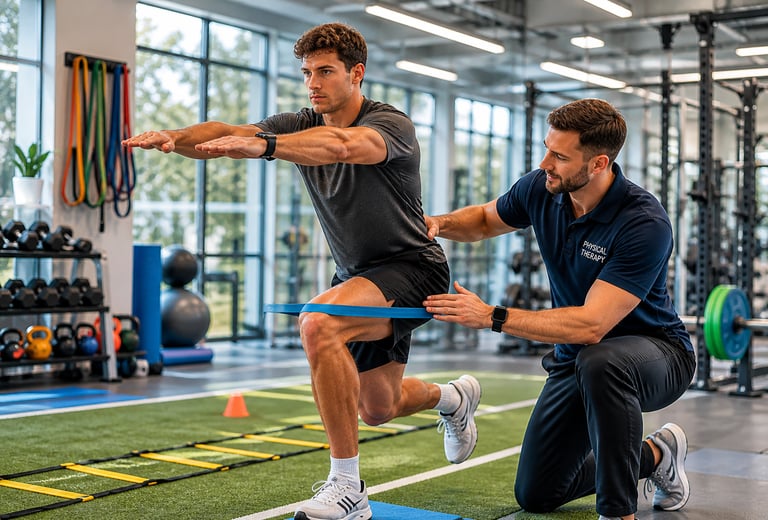
Physical therapists create targeted strength programs based on the demands of your sport or activity. These exercises:
Strengthen key muscle groups
Improve endurance
Increase power and force production
This translates directly into better performance on the field or in daily activities.
Injury Prevention
PTs analyze movement patterns to identify weaknesses or imbalances that may lead to injury. By correcting these issues early, physical therapy helps:
Improve movement efficiency
Reduce strain on joints and muscles
Prevent injuries before they occur
Faster Recovery
When injuries do occur, physical therapy plays a critical role in recovery. Structured rehab programs help athletes return safely and efficiently by restoring:
Strength
Flexibility
Coordination
Functional movement
Optimized Movement Mechanics
Physical therapists assess sport-specific movements such as running, jumping, or lifting. They then refine these patterns to:
Improve efficiency
Reduce unnecessary strain
Enhance overall performance
Improved Balance and Core Stability
Strong core muscles and good balance are essential for athletic performance. PT programs include exercises that:
Improve stability
Enhance coordination
Support proper posture and movement
This reduces injury risk and improves control during activity.
Takeaway
Sports physical therapy is a powerful tool for both recovery and performance enhancement. It goes beyond treating injuries by helping individuals move better, train smarter, and perform at their highest level.
At TLC Physical Therapy, we create personalized programs designed to help you recover faster, prevent injuries, and reach your full physical potential—whether you're an athlete or simply looking to stay active and strong.