
How to Improve Your Balance and Prevent Falls
Maintaining good balance is essential for preventing falls and staying independent as you age. This guide outlines simple, effective exercises that improve stability, strengthen muscles, and enhance coordination—helping you move with confidence and reduce your risk of injury.
Jason Lamendola PT
2/2/20262 min read
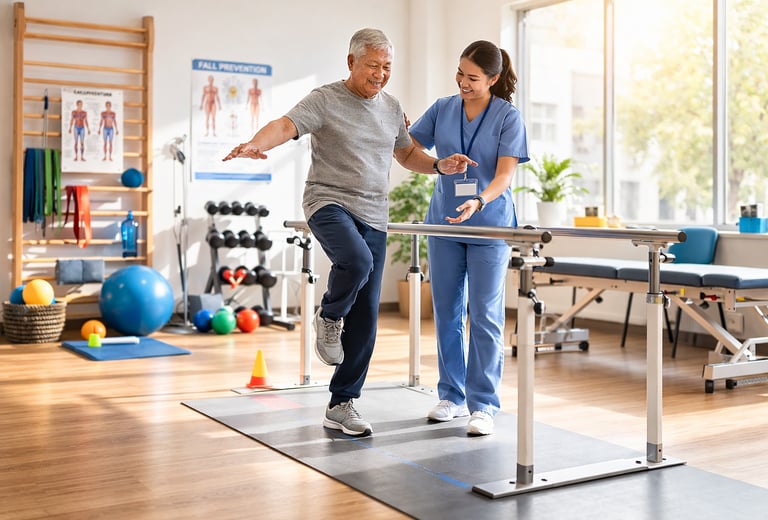
Introduction
Good balance is essential for maintaining independence, mobility, and overall health—especially as we age. Stability allows us to control our body position confidently and reduces the risk of fall-related injuries.
As we grow older, muscle strength naturally declines and reflexes slow down. This makes it harder to regain balance if we begin to stumble. The good news is that balance can be improved at any age with targeted exercises that strengthen muscles and enhance proprioception (your body’s awareness of position and movement).
Starting balance training early helps maintain long-term stability and prevents falls later in life.
Before beginning any exercise, stand on stable ground and position yourself near a support surface such as a wall, counter, or sturdy chair. If needed, start with both hands holding support. As you improve, reduce to one hand, then one fingertip, and eventually no support at all.
Single-Leg Balance Exercise
The single-leg balance exercise is simple but highly effective. It strengthens stabilizing muscles and improves coordination.
Step 1
Stand on one leg while holding onto a stable surface. Maintain an upright posture and hold the position for up to 60 seconds. Repeat on the other leg.
Step 2
Once comfortable, stand on one leg and fold your arms across your chest. Hold for up to 60 seconds on each side.
Step 3
Stand on one leg and extend your arms out to the sides. Maintain balance for up to 60 seconds.
Step 4
For an advanced challenge, stand on one leg with your arms folded across your chest and close your eyes. Hold as long as safely possible, then switch legs.
Toe-Heel (Tandem) Balance
Also known as heel-to-toe walking, this exercise improves posture and reduces body sway.
Step 1
Stand next to a counter or wall for support if needed.
Step 2
Place one foot directly in front of the other so the toes of the back foot touch the heel of the front foot.
Step 3
Shift your weight forward and step so the opposite foot moves ahead in the same heel-to-toe pattern.
Step 4
Continue walking in a straight line for several steps while maintaining good posture.
Hip Circles
Hip circles are dynamic movements that strengthen the core and hip muscles while improving balance and coordination.
Step 1
Stand with feet shoulder-width apart and place your hands on your hips.
Step 2
Gently shift your hips to the left, forward, right, and back in a circular motion.
Step 3
Start with small circles and gradually increase the size.
Step 4
Keep your core engaged and upper body stable throughout the movement.
Step 5
Reverse direction after several repetitions.
Additional Tips for Fall Prevention
Exercise regularly to maintain muscle strength
Wear supportive footwear
Remove tripping hazards at home
Ensure proper lighting in hallways and stairways
Have vision and medications reviewed regularly
It is always advisable to consult a physical therapist before starting a new balance routine—especially if you have experienced falls, dizziness, or mobility limitations. A professional can assess your strength, identify risk factors, and create a personalized fall-prevention plan.
Final Thoughts
Improving balance is one of the most effective ways to prevent falls and maintain independence as you age. With consistent practice and proper guidance, you can strengthen your muscles, improve coordination, and move with greater confidence.
At TLC Physical Therapy, our specialists design individualized balance and fall-prevention programs tailored to your needs. If you’re concerned about your stability or have experienced a fall, we’re here to help you regain confidence and stay safely on your feet.